
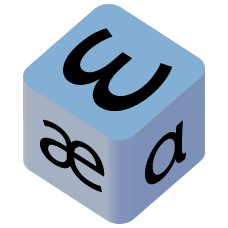
I saved this picture along with explanations of the words, but I lost the explanations, so I leave it to y’all to figure it all out for me again.
This is the “pie” in “piefed”
Why is it written twice ? Once “normal” and the other in italic ?
A : White (like “Albinos” => white)
Ē : Star (similar to English)
G : Gel (like French “Gel” means “Frost”)
Gh : Grass (similar to English)
Kw : Maybe Worm (Kwrmis => Wrms => Worms ??)
K : Heart (like French “Coeur”, english phonetics like K-uh-r)
L : Leaf (similar to English)
M : Moon (similar to English)
N : Cloud ? (similar to Spanish “Nube”)
O : Eight (similar to Spanish “Ocho”, Italian “Otto”)
P : Fish (similar to Spanish “Pescare”)
S : Sun (a.k.a. “Sol”)
T : Three (similar to English)
W : Water (similar to English)I don’t know for the others
Bh: Blüte means flower in German (compare: blossom)
Dʰ: *Dʰegᵘ̯ʰ: I found the translations burning/fever/day here, maybe the image shows the day side of earth or the indoeuropeans predicted the global warming?
Ǵh: Ast is branch in German
H3: h₃okʷ -> Auge in German, eye in English
N: Nebula in Latin, Nebel in German, Fog/Mist in English
R: Could either be *rēt (stick, rod) or *rēd (advice - “Rat” in German, great grandparent of the English “to read”)
Ō: Probably an alternative writing of *k̑u̯on, dog (French chien, German Hund, English hound), afaik noone knows where the Old English dogga came from and why it replaced the already common hound
U: Oxen
Y: jég is ice in Hungarian, jää in Finish and Estonian, but those are not indoeuropean languages‽I: *is is the root of the German “er” meaning “he”. Oddly, the English “he” seems to have different roots.
Why is it written twice ? Once “normal” and the other in italic ?
It’s imitating kids alphabet books where it first shows the print letters, then cursive.
Pretty solid, I think all are correct (I checked a few, just to make sure). For *gel-, cf. Latin gelu ‘ice’, from there Italian gelato ‘ice cream’. *nebhos yielded Slavic nebo ‘sky’, but it seems Latin nebula ‘cloud’ retained the original meaning (and thus Spanish).
D is definitely the sky dius or something
The next is dhegom for ground/earth
*deywós meyos! love it
**déywe, actually (not 100% sure about the accent but it is initial in Sanskrit according to Wiktionary, so…)
yeah i was too lazy to find rules for vocative forms. i admit it.
glad you caught me. ;)
B bel looks like Sanskrit bala “strong”.
H1 h1engw looks like Sanskrit agni or Latin ignis, but why n-gw instead of g-n?


