I’ve seen many debates about the need to dry PLA filaments. Looks like some people never need to do anything while others dry the hell out of them before printing.
I’ve been recommended once to print at 10% RH… After 48h of drying, I can barely get below 37%…
So: what’s the humidity level in the room your printer is?
You must log in or register to comment.

Too damn high
Dallas, I’ve never had an issue. Houston, I got all kinds of zits and pilling and was thinking about getting or making a filament dryer before we moved. Both can be pretty humid, but the difference between 60% and 90% is significant.
I just finished out some PLA spools I’ve had for a couple years now. They’ve sat in the open with no drying. Humidity sits in the mid 40s generally right now.
I live in a dry climate. I don’t bother with PLA, but I dry PETG. I printed some stuff from a roll of PETG that had been open longer than a year, and looking closely at the melted plastic coming out of the nozzle, there was noticeable bubbles and stringing during printing. Once dried, all went away. People who claim you don’t need to dry some filaments must not care much about quality.
Southern Norway is quite good for keeping stuff in the open.
Around 35% now, peaked at mid 50s in summer and much lower in winter.Never really need to dry PLA/PETG, but TPU does need it.
I do run both AMS every once in a while, mostly to regenerate the silica tubs a bit.
I did have stringing on PETG once, but drying while printing was enough to solve it.
I have humidity sensors in both my dryboxes and outside.
Where I live humidity in summer is 40-60% and the dryboxes will max out at 40% if left untouched.
In winter it’s 20-30%.
Petg starts having issues at 30 and you can hear the water boiling at 40
25%. My dehumidifier doesn’t go lower than that.
I’m of the general opinion that the hullabaloo about drying filament is largely not warranted in most cases. PLA is just not very hygroscopic and can sit out for months without any issues. Even PETG I don’t have any issues with it sitting out. The room I print in sits at about 50% humidity most of the time.
I keep most of my filaments in a box with dessicant that I bake maybe once a year, but I’m not convinced it is really doing much. The only reason I have a drier is that I started printing occasionally with materials that are much more hygroscopic (e.g. TPU).
People who obsess about filament because of YouTube drying end up driving off volatile plasticizers and ending up with brittle filament that ruins a roll.
Like every fucking YouTube video has to explain what hydroscopic means like we’re in grade 7 science class.
You have to be careful with this. The humidity reported by the local weather station may not be the same as the humidity in your storage room.
I have just gotten an airtight box and a few packs of silica gel and store all my filament in there.
I live amidst the great lakes. I took great care with bagging and sealing and drying when I was using Creality printers, because it really mattered. I’ve been lazy about it since ditching them, and my Centauri Carbon could not give a shit. I could leave filament on my lawn and this thing would just chew right through it.
In northern Minnesota the humidity can vary greatly. Last weekend it was 90+% outside. While indoors the air conditioning had the house around 50%. And by winter time, the outdoor humidity can be as low 20% and indoors depending on heat source, around 30% to 40%.
I finally broke down and bought a dedicated filament dryer, Sunlu S2, because my trusty old food dehydrator died the week before. I do dry PETG when it tells me to, and I always dry TPU. But never PLA.
Just for fun, after I was done drying and printing some PETG, I dropped a mostly used spool of Sunlu white PLA into the dryer, (first time ever for PLA). That spool has been laying around in the open for at least 6 months now. The humidistat on the dryer showed 30%. I let it dry down to 20% and ran a test cube. No difference in print quality that I can see.
Outside, it usually sits around 65-70% humidity, over 80% during the summer. Hong Kong is like that unfortunately. Dunno about the room my printer sits in though, I don’t have a hydrometer in there, but I imagine it’s a little bit lower (maybe 60%? 70% in warmer months?). I don’t dry my PLA though and I’ve mostly had good printing experiences.
The humidity here varies between 3% and 100%.
Things change from PLA being regenerated by being left open to it not lasting for two weeks before it needs drying.
Unless you live somewhere where it’s always close to that low in my interval, I do strongly recommend a drybox to anybody wondering if they need one. At 60% humidity, PLA already visibly degrades way faster than you will use in a hobby.
Also, in my experience, filament driers only help with close to dry filaments. The temperature you would need to really dry them is larger than the glass point of most plastics. Microwaves work better (I guess because they heat the water in an uneven way) but it’s still hard to regenerate very moist filaments.
@marcos @matlag according to my sources actually you can use PCTG & ASA which are less resistant to moisture in terms of #3dprinting thermoplastic filament I recommend PCTG because it’s in the same family as PETG yet x20 durable
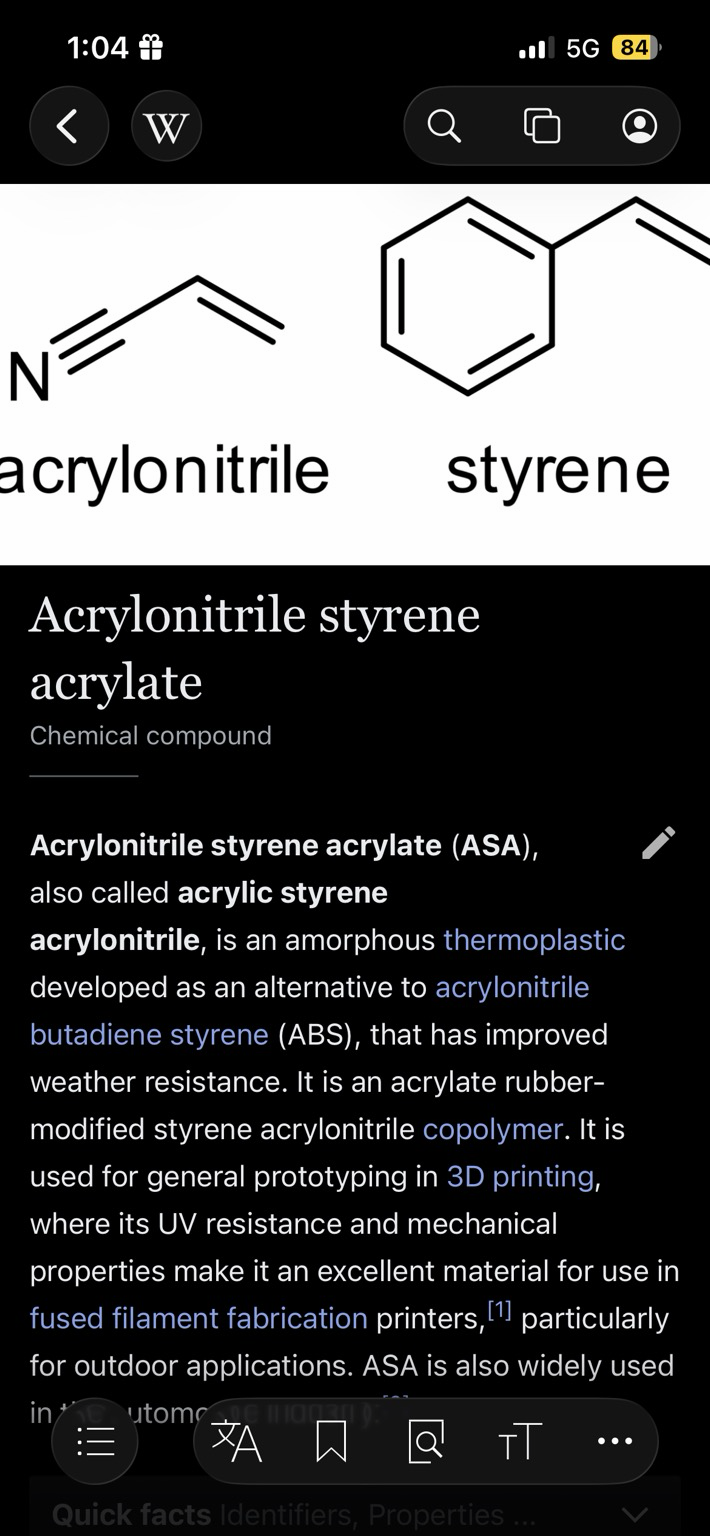
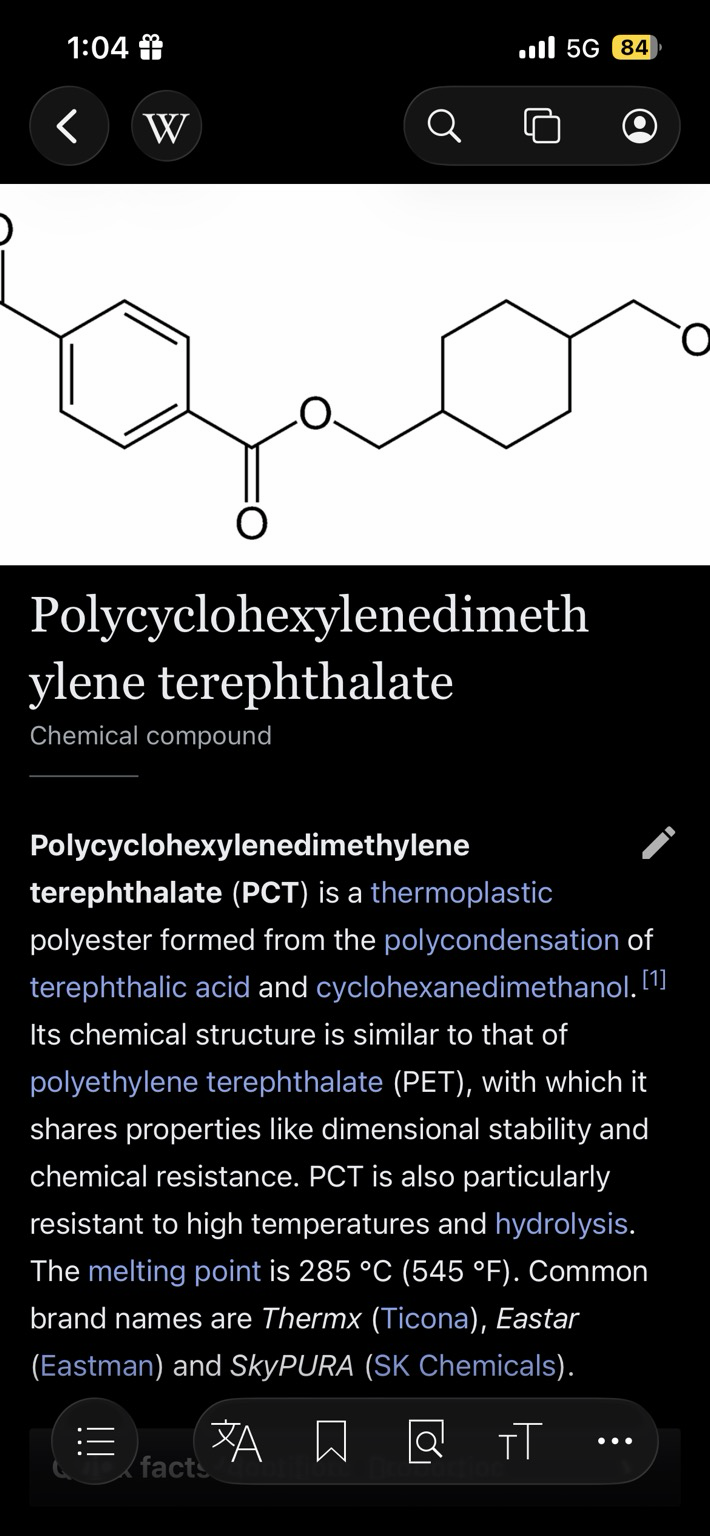
less resistant
You mean “less vulnerable” here?
I don’t think we can move most people out of PLA. It’s cheap and available everywhere. But I do agree it’s worth pointing that some plastics do not have this problem.
@marcos the other way is to have enough dehumidifier capacity
@marcos actually the Resin codes are the most popular because of mass production
@marcos i do not think #vulnerable is the right world to description for thermoplastic #3dprinting filament each has its upper and lower (hands)
I have a spool of PLA that’s been sitting out for a year in 30-80% humidity and it printed up just fine, I didn’t even dust it off.
Thomas Sanladerer soaked rolls in a bucket of water to prove a point.
Except winter when heater is on, it’s nearly always over 50-60% (and up to 75). I almost never dry my filament, but i work most of time with one open spool at a time. Once opened, my spool last between few days to couple of weeks. With high humidity (65 and over) i usually start to get strings after about a week. Never had strings with 45% humidity except spool that arrived already humid