
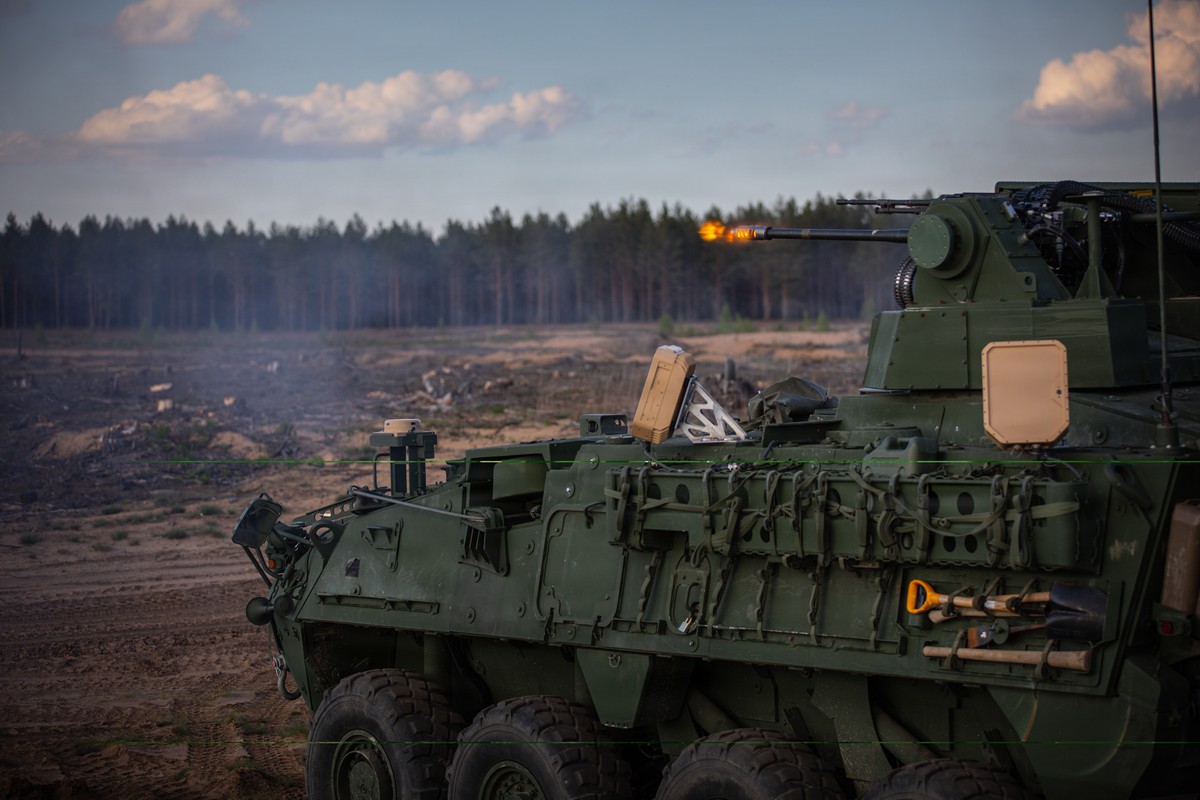
30mm rounds are about $130 USD each. The versions of the Stryker that are armed with 30mm cannons (the turrets on which they are mounted are designed by an Israeli R&D company because of course they are) carry 156 rounds. That’s about $20k for a full round burst, which would be needed on any smaller drones even with targeting assistance since most drones can change direction quickly to avoid fire.
That’s affordable compared to a top of the line Shahed drone, but still ridiculously costly against any drone that would be targeting a light infantry vehicle like this one. If this were a serious effort they’d be using the 7.62 NATO guns most strykers have, not the 30mm.
Wait why do you assume it would need to fire all 156 rounds that is nuts?
deleted by creator
A CWIS system is a horrible comparison as the CWIS needs to actually physically hit the target with a bullet, of course it has to fire 200+ rounds.
A 30mm airburst grenade just needs to get into the ball park. It is an an entirely different problem. There are literally airburst 30mm cannons being used very successfully for air defense in Ukraine right now as we speak with the Skyranger…???..??? Do you think these don’t work?
https://en.wikipedia.org/wiki/Skyranger_30
There has yet to be a cannon based anti-air that can even pretend in its wildest field test fantasies to be efficient for ballistic projectiles.
You don’t know what the hell you are talking about at all. Ballistic projectiles don’t dodge interception except with extremely expensive ICBM munitions, that is why they are called “ballistic” so what exactly are you talking about then? Drones or ballistic projectiles?
Additionally 155mm cannon artillery is being developed into an air defense tool so you are wrong again.
MDACS transforms heavy artillery into a counter-air weapon designed to engage drones, cruise missiles, helicopters and aircraft through rapid-fire guided 155 mm rounds supported by radar and battle-management networks. Its air-transportable design and deep magazine concept reflect a broader shift toward layered, high-volume air defense systems able to protect forward bases, logistics hubs and dispersed forces in future saturation warfare environments.
deleted by creator
There is abundant operational evidence that 30mm airburst munitions are extremely effective against drones and drone swarms.
There is no 30mm grenade used on the Stryker, never has been and no proposals are around to suggest it will be.
Again you confidently don’t know what the hell you are talking about.
The M1296 Infantry Carrier Vehicle Dragoon (ICVD) is an upgraded variant of the Stryker infantry carrier vehicle (ICV), designed to enhance the firepower of U.S. Army Stryker brigade combat teams (SBCTs). The vehicle integrates a 30 mm XM813 Bushmaster II autocannon in a Kongsberg MCT-30 remote turret, significantly increasing its lethality over the standard Stryker Infantry Carrier Vehicle (ICV).[5]
https://en.wikipedia.org/wiki/M1296_Dragoon
This isn’t a theoretical system either, a strategic amount were just moved to Taiwan, please do some more research before asserting this stuff.
You are so off the mark here that the US is actually specifically developing and fielding a 30mm airburst rifle for infantry in large part to counter drones. Literally you almost could not be more wrong in your confident assertions about this stuff.
The AH-64 with 30mm airburst grenades has become a primary tool for countering drone swarms along with APKWS rockets and more sophisticated AA missiles. Footage clearly shows with normal non-airburst 30mm munitions it typically takes about <10 shots from a well positioned Apache to destroy a shahed/flying bomb. A ground system will be less efficient ammo wise in most situations but I wouldn’t imagine by much.
https://taskandpurpose.com/news/army-apache-counter-drone-bullets/