@PugJesus
The Roman Empire was such a laughably bad way of running a country/countries.
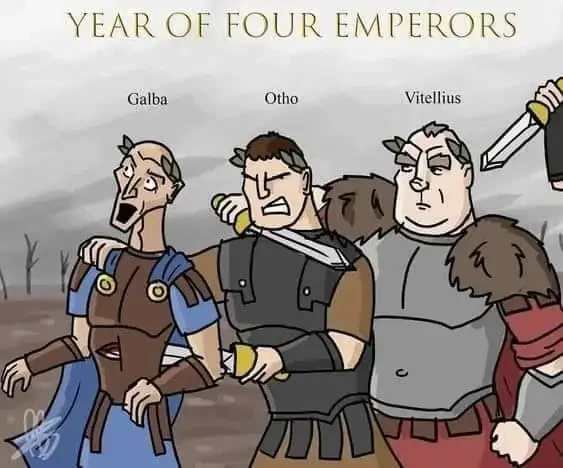
The main good point of the year of 4 emperors for most people was, yes, at the end of it you’d had another year of horrific misrule as usual, but at least 3 of the arseholes were dead, which was better than average.
During the Principate, most people in the Roman Empire had a prolonged period of peace. Around 200 years. The Year of the 4 Emperors was exceptional.
For that matter, even the worst Emperors, like Caligula and Nero, were more ruinous to the city of Rome than the wider Empire, which largely ran with only minimal input from the central apparatus.
Only later would you get Emperors who bork the whole thing and constant civil wars, in the 3rd century AD.
@PugJesus
I mean, it was probably pretty bad for the large fraction of the population who were slaves, and not great for the plebeians either. The guys who were educated enough and had the leisure to be writing stuff down may have left out some of the downsides that weren’t apparent to them.
There’s actually considerable academic study on the lives of the common people in the Roman Empire in the modern day. The short answer is “It was bad for the poor by modern standards, but not nearly as bad as most pre-modern societies.”
There was a lot of public infrastructure and amenities that even the impoverished had access to, and many of the basic functioning of civil society and law which we take for granted were Roman-era innovations - at least for much of Europe west of Greece. The stability and security offered by the Principate era allowed living standards to rise considerably amongst the working class, especially the urban working class, but with considerable gains in the rural peasantry as well. There’s a fantastic book, Imperial Ideology and Provincial Loyalty in the Roman Empire, which goes over why even non-Roman provincials often preferred the rule of the Roman Empire to the prospect of local elites re-assuming control.


@PugJesus
The Roman Empire was such a laughably bad way of running a country/countries.
The main good point of the year of 4 emperors for most people was, yes, at the end of it you’d had another year of horrific misrule as usual, but at least 3 of the arseholes were dead, which was better than average.
During the Principate, most people in the Roman Empire had a prolonged period of peace. Around 200 years. The Year of the 4 Emperors was exceptional.
For that matter, even the worst Emperors, like Caligula and Nero, were more ruinous to the city of Rome than the wider Empire, which largely ran with only minimal input from the central apparatus.
Only later would you get Emperors who bork the whole thing and constant civil wars, in the 3rd century AD.
@PugJesus
I mean, it was probably pretty bad for the large fraction of the population who were slaves, and not great for the plebeians either. The guys who were educated enough and had the leisure to be writing stuff down may have left out some of the downsides that weren’t apparent to them.
There’s actually considerable academic study on the lives of the common people in the Roman Empire in the modern day. The short answer is “It was bad for the poor by modern standards, but not nearly as bad as most pre-modern societies.”
There was a lot of public infrastructure and amenities that even the impoverished had access to, and many of the basic functioning of civil society and law which we take for granted were Roman-era innovations - at least for much of Europe west of Greece. The stability and security offered by the Principate era allowed living standards to rise considerably amongst the working class, especially the urban working class, but with considerable gains in the rural peasantry as well. There’s a fantastic book, Imperial Ideology and Provincial Loyalty in the Roman Empire, which goes over why even non-Roman provincials often preferred the rule of the Roman Empire to the prospect of local elites re-assuming control.
It’s a very fascinating subject.