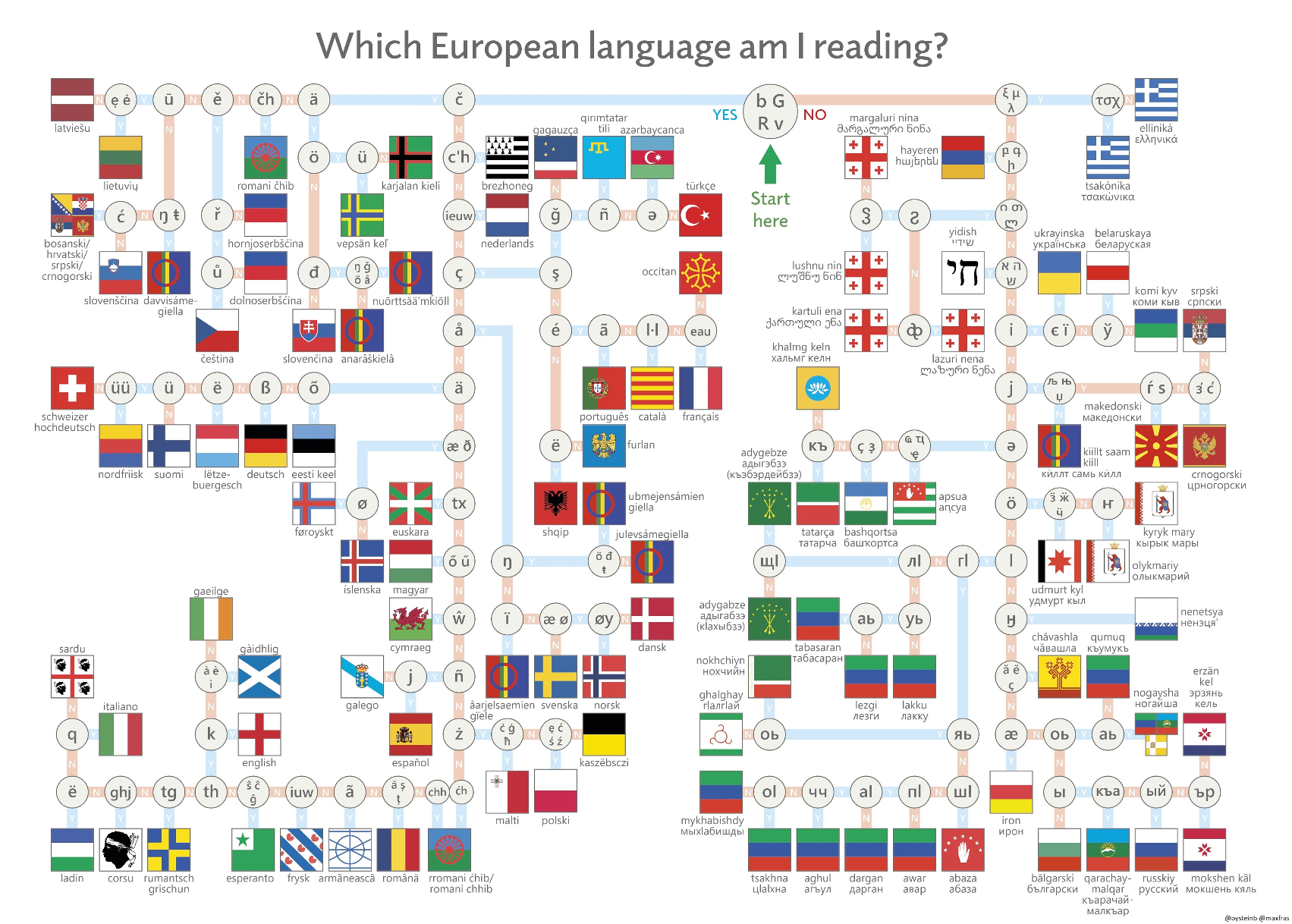
Camus [il/lui]@lemmy.blahaj.zone to [Locked] YUROP@lemm.ee · 2 years agoWhich European language am I readingexternal-linkmessage-square89linkfedilinkarrow-up1379arrow-down112file-textcross-posted to: esperanto@sopuli.xyzinteressant
arrow-up1367arrow-down1external-linkWhich European language am I readingCamus [il/lui]@lemmy.blahaj.zone to [Locked] YUROP@lemm.ee · 2 years agomessage-square89linkfedilinkfile-textcross-posted to: esperanto@sopuli.xyzinteressant
cross-posted from: https://jlai.lu/post/9070854 Source : https://tech.lgbt/@pierogiburo/112875137520784379
minus-squareDr. Bob@lemmy.calinkfedilinkEnglisharrow-up5·2 years agoFrench is a strange one here - they have “w” (double vé in the alphabet) but it’s used almost exclusively in loan words. So I’m not certain it’s determinative the way it’s presented here.
minus-squareServais (il/lui)@discuss.tchncs.delinkfedilinkarrow-up16·2 years agoI think that choice is more about “ieuw” as a whole, like “nieuw” in Dutch, not the separate 4 letters (like b G R v at the beginning)
minus-squareEarMaster@lemmy.worldlinkfedilinkarrow-up5·2 years agoI don’t get your comment. The “w” isn’t used in this graph as a single character.
minus-squareDr. Bob@lemmy.calinkfedilinkEnglisharrow-up3·2 years agoThe Dutch exclusion makes sense to me. I was reading it as separate letters which made the use of “e” a second time redundant.

French is a strange one here - they have “w” (double vé in the alphabet) but it’s used almost exclusively in loan words. So I’m not certain it’s determinative the way it’s presented here.
I think that choice is more about “ieuw” as a whole, like “nieuw” in Dutch, not the separate 4 letters (like b G R v at the beginning)
I don’t get your comment. The “w” isn’t used in this graph as a single character.
The Dutch exclusion makes sense to me. I was reading it as separate letters which made the use of “e” a second time redundant.
deleted by creator