Full text:
It’s a slight improvement, but not enough to celebrate. Global hunger figures, released Tuesday, July 21, by several United Nations agencies, revealed some positive developments, but these were overshadowed by worsening food insecurity in Africa. For the first time, this continent now counts the highest number of people living with chronic hunger, surpassing Asia.
The overall decline in world hunger, driven mainly by better indicators in Asia, particularly in India, and in Latin America, is therefore a double-edged sword. According to UN projections, the number of undernourished people stood at 645 million in 2025, or 7.8% of the global population, a slight drop from the previous year (659 million in 2024, or 8.1% of the population).
Moderate or severe food insecurity – a broader indicator referring to people without access to healthy food, forced to skip meals or reduce portions – followed the same trend. According to these estimates, it now affects 2.1 billion people, or 25.8% of the population, down from 27.1% in 2024.
But even if these indicators continued to decline, hunger and food insecurity remained extremely high, notably above pre-Covid-19 pandemic levels. “With the Covid-19 crisis, inequalities have grown both between and within countries. Since then, growth has rebounded, markets have bounced back, but food security has not,” said David Laborde, economist at the Food and Agriculture Organization of the United Nations (FAO). In recent years, the worsening climate crisis and the emergence of conflicts in new regions have delayed, or even halted, progress in this area. Rise of anemia
The outlook for 2026, which is not included in the UN agencies’ analysis, calls for caution. “The downward trend in hunger needs to be put into perspective,” said analyst Marie Cosquer from the NGO Action Against Hunger. “Since the start of the year, we have seen a rise in conflict, a drastic drop in official development assistance and budgets for climate action and we may be facing a ‘super El Niño’ event.” This oceanic phenomenon, the duration and intensity of which are still being confirmed, leads cyclically to an increase in extreme weather events, with potentially major impacts on agricultural production in several regions of the world.
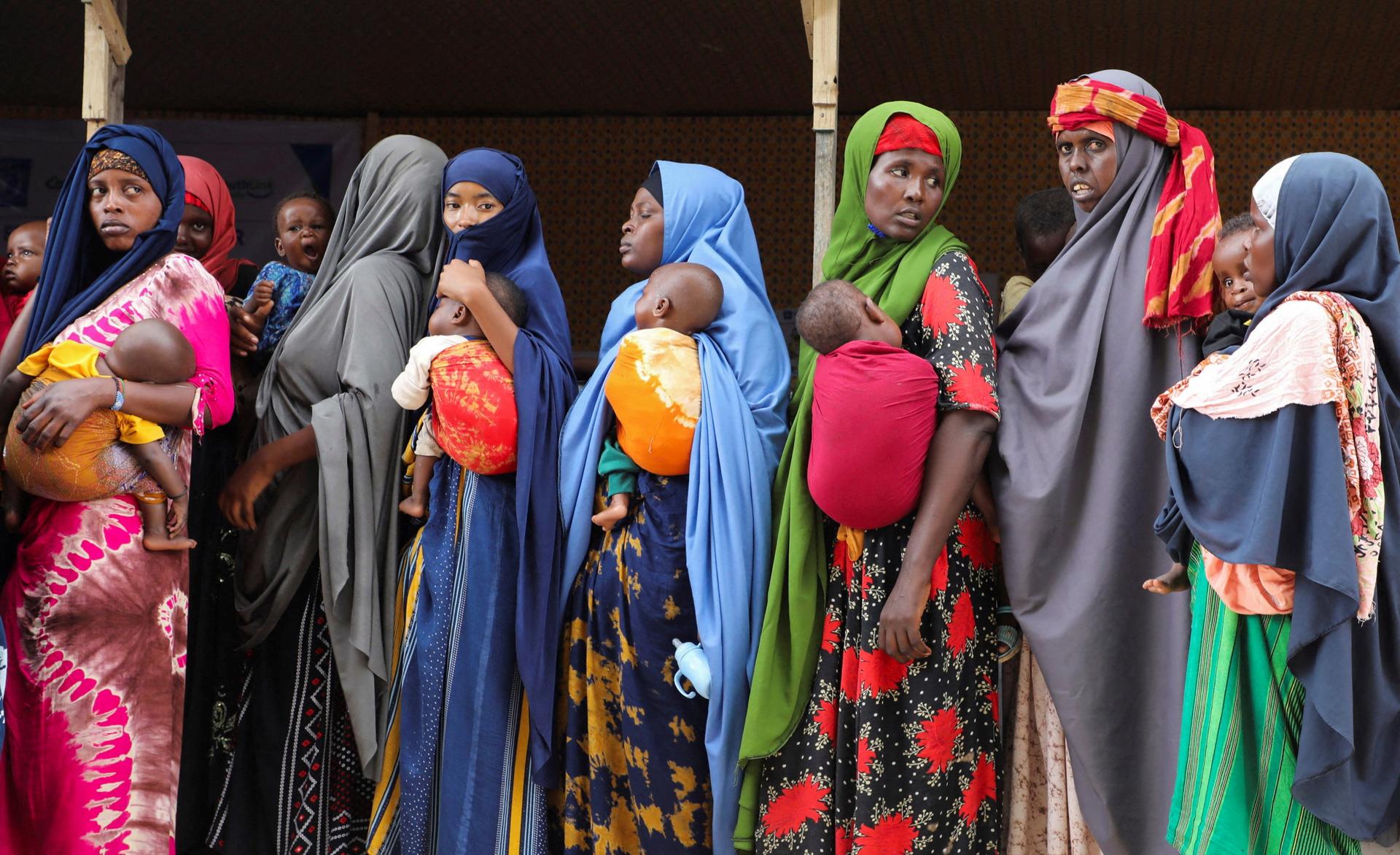
The lack of recovery in Africa is particularly alarming. One in five people suffers from hunger in this continent, far outpacing other regions, compared to just 8% of people in Oceania, 6% in Asia and 4.8% in Latin America and the Caribbean. While these regions saw stabilization starting in 2022 and then made progress in food security, Africa’s indicators continued to worsen through 2025. For Million Belay, coordinator of the Alliance for Food Sovereignty in Africa (AFSA), the continent’s decline can be explained by “decades of dependence on volatile global markets and imported inputs have weakened local food systems.”
Another indicator highlights these vulnerabilities: Two-thirds of Africa’s population cannot afford a healthy diet, more than double the levels estimated on other continents. “That isn’t an accident; it’s the result of a food system where a handful of powerful traders, processors and retailers set the prices and pocket the profits,” said Raj Patel, member of the International Panel of Experts on Sustainable Food Systems (IPES-Food) and professor at the University of Texas.
With only four years left, it is clear that the international community’s goal of eradicating hunger by 2030, which was set in 2015 as part of the Sustainable Development Goals, is out of reach. Several other indicators are also deeply concerning, starting with dietary diversity, which is insufficient for 63% of women aged 15 to 49, who are also experiencing rising rates of anemia. Meanwhile, obesity has continued to rise, increasing from 12.1% of adults in 2012 to 16.2% in 2024, moving further away from the target to halt the increase by 2025. Among children, obesity is now the leading form of malnutrition, ahead of underweight.
Impact of proactive policies
“The international community has never mobilized properly to secure the resources needed to achieve its food security goals,” said Laborde. “Since 2015, it has been very clear that inaction will cost much more than taking action, but that has never been considered.” Even without the global disruptions caused by the Covid-19 pandemic or the war in Ukraine, the hunger-related development goals would not have been met, according to the economist.
With shrinking budgets and an increasing number of international crises, the path to renewed solidarity appears narrow. Yet there are examples showing that proactive policies supporting local farmers, households and vulnerable groups, such as pregnant women and young children, can have a notable impact on reducing hunger and malnutrition. This has been the case in Brazil under President Luiz Inacio Lula da Silva, who made food security a priority by expanding cash transfer programs, school and university meal programs and public procurement from local farms, all of which were highly successful. “Hunger is not a technical issue related to food production,” said Ysé El Bouhali Bouchet, advocacy officer at the CCFD-Terre Solidaire NGO. “It is a matter of distribution and access, which brings us back to the fundamental issue of inequality.”
Hunger recedes in 2025
How much of this is caused by Ozempic? 🤣