

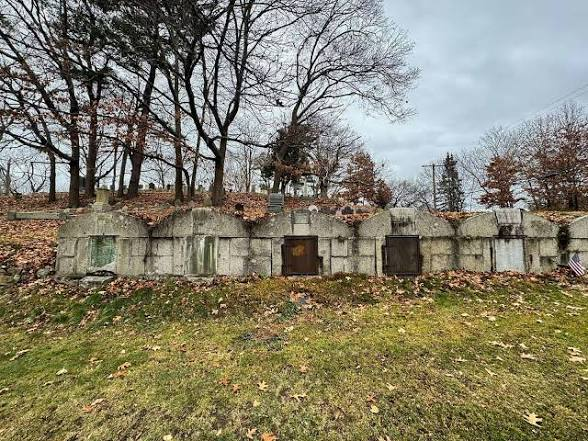
In Weymouth, the oldest stories are not tied to a single building, but to the ground itself—specifically the area around the Old North Cemetery and the nearby shoreline where the early Wessagusset Colony once stood.
The origin of the legend traces back to 1623, during a period of tension between English settlers and the local Massachusett people. Historical accounts describe a confrontation led by Myles Standish, resulting in the deaths of two indigenous leaders, commonly named as Pecksuot and Wituwamat. Their deaths were not treated quietly. According to records and later retellings, their heads were taken as a warning, an act meant to assert control rather than resolve conflict.
That part belongs to history.
What follows belongs to the town.
Over time, reports began to surface of figures moving through the cemetery grounds and the surrounding woods—most often described as two shadowed forms, walking without heads. The sightings are not dramatic. There are no chases, no direct confrontations. The figures are seen at a distance, moving slowly, sometimes near the tree line, sometimes closer to the older graves. They do not interact. They do not acknowledge. They move, then they are gone.
The story gained renewed attention in the early 1800s when a man named Edward Blanchard, digging a foundation near the cemetery, reportedly uncovered two headless skeletons. There is no confirmed record tying the remains directly to the events of 1623, but the timing and condition were enough to fuse the discovery with the existing legend. For many in the area, it wasn’t proof—it was confirmation.
The land itself carries the story forward. The cemetery sits near the water, and the surrounding woods break the wind just enough that sound behaves strangely. Footsteps can seem closer than they are. Movement at the edge of vision holds longer than it should. People walking alone in the area, especially near dusk, often describe the same thing: not fear at first, but awareness—like something else is present, moving on its own path.
Other locations in Weymouth carry their own smaller stories. The Emery Estate has been the subject of repeated reports involving shadow figures and physical sensations that visitors struggle to explain. At the Fogg Library, local tours reference long-standing rumors of unexplained activity tied to the building’s upper floors. Nearby, the Abigail Adams Birthplace draws quieter attention—less about sightings, more about a consistent sense of presence noted by visitors.
None of these accounts are verified in any formal sense. There are no confirmed identities, no physical evidence that ties what is seen or felt directly to the events described. But the consistency of the stories—spread across generations, locations, and different people—has kept them active.
In Weymouth, the oldest legend doesn’t rely on a house or a single moment. It rests in a place where history left something unresolved, and where, according to those who pass through it, that absence still moves.