
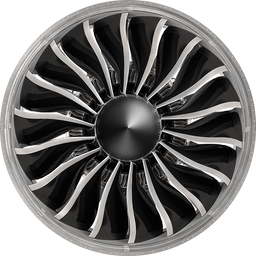

Under the initiative, either Singapore Changi Airport (SIN) or Seletar Airport (XSP) will be used as a testbed to co-develop what CAAS describes as a “comprehensive readiness framework” for integrating open-fan engines and next-generation aircraft into existing airport operations. The work will cover aircraft and engine design considerations, airport infrastructure modifications, changes to operational procedures, safety standards and regulatory processes.
And how much more easily they could survive it. Conventional turbofans get the birds stuck inside and fail. These could effectively bounce them off.
Turbofans are tested by shooting a standardized frozen turkey into them. The engine must survive to be qualified.
I’m sure a bad luck event can have birds stuck inside, but in most cases they go all the way through.
Edit: found this reference: https://www.ecfr.gov/current/title-14/chapter-I/subchapter-C/part-33/subpart-E/section-33.76
And this video: https://www.youtube.com/watch?v=VBHJvSJoX4k Not sure if it’s the right thing, some comments say it’s a blade separation test, which is much more violent than bird ingestion.
It makes sense, at that altitude birds are frozen solid.
Hehe, I expect they’re thawed before the test, but who knows!
The GE9x is shown being tested by launching a block of solid ice at the fan, and it shreds the ice!
NIST frozen turkeys must cost as much as a house.
That’s why plane tickets are so expensive…
Makes sense. The peanut butter jar alone is over $1,200. Imagine what a battery of frozen turkeys would cost.
Sure, a few seagulls would survive but that is something that could easily be fixed in another version.