Not really. An atheists sense of morality is just based on the society they grew up in instead of the religion they were indoctrinated with. But that morality isn’t absolute, it changes a lot depending on your circumstances and way of life and everyone’s a bit different in that regard.
Our sense of morals are adaptive and mutable, for good and ill. I have definitely done dumb stuff without thinking in the past, I have done the wrong thing with the best and worst of intentions, I try to learn from it and become a better person.
Also, I do not have some paternal permission slip of a god who will absolve me of my wrong doings, I have to live with everything I do, good and bad, it’s a pretty powerful incentive to do better and to seek professional help when needed.
There is such a thing as absolute morality, I believe. I’m not claiming anyone actually has all the right answers, though, but the right answers do exist.


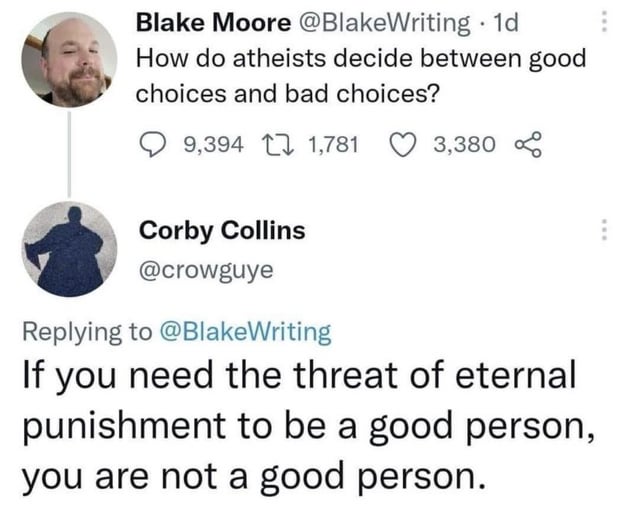
Unlike theists whose morality is relative to what their religion tells them, our sense of morality is absolute.
Not really. An atheists sense of morality is just based on the society they grew up in instead of the religion they were indoctrinated with. But that morality isn’t absolute, it changes a lot depending on your circumstances and way of life and everyone’s a bit different in that regard.
Our sense of morals are adaptive and mutable, for good and ill. I have definitely done dumb stuff without thinking in the past, I have done the wrong thing with the best and worst of intentions, I try to learn from it and become a better person.
Also, I do not have some paternal permission slip of a god who will absolve me of my wrong doings, I have to live with everything I do, good and bad, it’s a pretty powerful incentive to do better and to seek professional help when needed.
There is such a thing as absolute morality, I believe. I’m not claiming anyone actually has all the right answers, though, but the right answers do exist.
Could you define absolute morality and provide an example?